are we there yet?
We’ve all asked it. Some from the reeking confines of a too-small car, thigh-to-thigh with a nettlesome sibling. Others crammed into narrow coach seats on a trans-continental trip with irate flight attendants and a crying baby nearby. Always somewhere between boredom and impatience, after the promise of ‘something better’ has eroded to ‘it better be worth it.’
Beneath the question lies an assumption: We'll know when we get there.
For most of my life, the future felt like that.
Somewhere ahead, a brighter place with happier people waited for us.
Technology would make life easier. Medicine would make us healthier. Machines would do the boring work. Imagination was the boundary, not a quandary, because everyone wanted to be more connected, more prosperous, and—surely—more civilized.
Yet somewhere along the way, Monday morning replaced the future. Like a weekend, the future comes and goes. Places we pass through rather than stay—because they weren’t what we thought they’d be.
That's what interests me.
Not whether the world is getting better or worse according to someone's political philosophy.
Not whether one political party is responsible or another deserves credit.
Those arguments have their place.
But step back from them for a moment.
Look around.
The world is changing.
And much of it isn't changing the way we expected.
The Future We Were Promised
We imagined flying cars.
We got smartphones.
We imagined robots doing our chores while we dreamed the big dreams.
We got algorithms deciding what we should watch, read, buy, and sometimes believe.
We imagined computers making information universally accessible.
We got more information than any human being could possibly process—and no reliable way to know which of it deserves our trust.
We imagined technology bringing people together.
Instead, people can argue with faceless enemies hiding behind keyboards who might not even be real.
The future arrived. It just didn't look like the brochures.
That's not technology’s fault. Technology did exactly what we asked it to do: make things faster, more convenient, more connected, and more efficient.
But efficiency doesn't measure why we should go. It tells us how to get there with the least effort.
We Keep Moving
That's the strange thing about the future. You don't notice the arrival. You wake up and you’re there. No one announces: ‘Congratulations. You are now living in the future.’ One day the things that once seemed impossible become ordinary—the computer in your pocket, the conversation with someone on the other side of the planet, a vehicle that knows where you’re going before you do. Rules established by others become embedded in machines that adapt to the world around us. Eventually, we adapt to them—because that's what humans do.
First, the extraordinary becomes ordinary. Then ordinary becomes invisible. And that's when I start wondering: What else have we stopped noticing?
The Future Isn't Neutral
Every technology changes more than the task it was designed to perform.
The automobile didn't just make transportation faster.
It changed cities.
The telephone didn't just make communication easier.
It changed relationships.
The internet didn't just make information available.
It changed our definition of information.
Artificial intelligence? We think it will change how we work.
We have no idea what it will really change.
Every new system creates new possibilities. It also creates new dependencies.
That's not politics. It's physics.
Push on one part of a system and something else moves.
We rarely know what that something will be.
This Is Where the Quiet Apocalypse Begins
I write about a quiet apocalypse because I'm fascinated by what happens between something changing and people realizing that it has changed.
The world doesn't have to end for the world to become different.
A rule changes.
Then another.
A technology becomes popular, then it becomes indispensable. Not because we agreed it should be, but because we voted without knowing it. From first adoption of ‘something new’ for the promise of ‘something better’, we ride the wave until we’re left behind. Institutions adapt. Governments regulate. Businesses respond. Most people adjust. Eventually nobody remembers what things were like before, except those who can’t adapt.
We live in a marginal world where non-participants are marginalized. Systems increasingly optimize for the average user. But actual people aren't average. Those who don't fit the system become outsiders. Eventually everyone discovers that the "average" person the system was designed for doesn't really exist —which means everyone is marginalized.
Not because anyone decided to create a new world, but because the fictional average person kept responding to the last change. And when the average is what matters, no one belongs because none of us are average. That's how the future can arrive without anyone seeing it coming, just a series of reasonable decisions made by average people.
Are We There Yet?
Maybe the question isn't whether we're living in the future.
We obviously are.
The question is whether we're living in the future we expected. Some things are better than we imagined, some worse, and some different because everyone’s preferences differ. And some of the things we feared most may have arrived so gradually that we stopped recognizing them as things to fear. That's the part I find most interesting.
It requires distance to make sense of it.
To see we’re on a path we didn’t want, we have to diverge far enough from the goal to notice.
The future is always one second away. We make today's decisions about tomorrow using assumptions from yesterday. And yesterday’s world no longer exists.
Maybe that's why I keep writing about people who notice that something doesn't fit.
Someone looks at the world everyone else has accepted and asks a simple question: Why?
That question can be inconvenient.
It can be dangerous.
It can change everything.
The world doesn't have to end for the world to become different.
Once you notice that the world has changed, you have to decide what to do about it.
And maybe that's what the question "Are we there yet?" was really asking all along.
Not: Have we reached the future?
But: Is this where we were going?
And: Have we already arrived at the future we feared?
Why I Write
Most stories about the end of the world begin with something impossible to miss—a mushroom cloud, an asteroid, or the dead rising. Civilization collapses, and the survivors spend the rest of the story trying to stay alive. I write about something different.
What if the end of the world began quietly?
What if the first signs weren't explosions or armies in the streets, but things that could be explained away such as a market setback or a missing person? More troubling, but still easy to ignore, would be a government decision that doesn't make sense or a coincidence that isn't really a coincidence. Something changes. Most people don't notice or care enough to question it. Life continues, but society’s course has changed for the worse. That's the quiet apocalypse.
The Most Dangerous Thing About an Apocalypse
Many stories present the apocalypse as an event because it’s easy to understand. Something happens, and everything changes. People react because the danger is obvious. The solution to the problem is also obvious—survive, flee, stop the villain. This cinematic style creates a hero to root for and a clear winner.
It’s the change people don’t see as dangerous that creates the most frightening stories. People get the groceries, pay bills, and go to work.
The police still answer calls. Children still go to school. Politicians still make promises.
People fall in love, get married, argue with their neighbors, complain about traffic and watch television.
Normalcy is the problem. Because if the world looks normal, who is going to believe the person who says it isn't? This is where the quiet apocalypse becomes interesting to me.
The danger isn't what happens to civilization. Dystopian fiction describes many such outcomes. The danger stems from stopping the changes before reaching the outcome. It’s like disarming a bomb with plenty of time on the clock.
The expert who’s disarming the bomb feels the danger. Everyone else can go to lunch.
This perception asymmetry drives the tension. If the expert fails, the bomb explodes. As long as the bomb hasn't exploded, everyone else can continue believing everything is normal.
Those not directly affected might see it on the news or miss it altogether. What they perceive determines how they respond—and ultimately where we end up.
The First Sign Might Be Something Ordinary
In my stories, something happens that seems normal—bad weather, a murder, a voice on the phone. Then something doesn’t fit. The weather event is more extreme. The murder has a message. The voice is from the past.
Something ordinary becomes extraordinary only after someone sees it through a different lens. The thing that happened shouldn’t be possible. That's the foundation of my stories.
Detective Zalerian doesn't begin with the answer. He begins with a crime scene. Lenny Smalls begins with survival. Claire Holloway begins with a desire to make things right.
The apocalypse is the larger system. The story is the lens. The hero sees through it.
The mystery is what happens when reality stops matching the explanation everyone else has accepted.
In The Zalerian Chronicles, that means seeing the beginning of a world-changing event through the eyes of law enforcement—people whose job is to respond to individual problems while something much larger is developing around them.
In the Lenny Smalls Adventures, the physical world changes.
In the Claire Holloway mysteries, the question becomes more personal. What happens when an ordinary person discovers that the truth matters more than the story everyone else has accepted?
Different stories.
Different characters.
Different points of view.
The same world and underlying question: What happens when reality changes before people are ready to admit it has changed?
Why Write About the Future?
Because the story setting isn’t really about the future.
Fiction has always been a way of talking about the present without being trapped by it.
Put a society fifty years from now and suddenly we can see things that are difficult to see when they're happening around us.
A system that seems perfectly normal today can look very different when time has amplified its consequences. A small compromise becomes a governing principle. An incentive becomes an institution.
An institution becomes a system. The system becomes "the way things are." And by then, nobody remembers there was ever a choice.
That's what interests me about the quiet apocalypse.
It isn't really about predicting what will happen.
It's about asking what we're already doing—and wondering where it leads.
We Are Very Good at Explaining Things Away
Humans are remarkably adaptable. We tend to see this as a strength. The water rises. We move to higher ground.
It may also be one of our greatest weaknesses. If the water doesn't stop rising, moving higher isn't enough. Eventually, we have to move away.
Give us a new problem and we'll find a way to live with it. This allows the larger pattern to continue unnoticed. The temporary inconvenience becomes permanent. The emergency measure becomes policy.
The unusual event creates the precedent. Warnings become background noise. Then: "That's just how things are." That’s when the conversation ends.
Until someone asks why.
And that's where my stories begin. Not when something terrible happens, but when someone notices that something doesn't make sense anymore.
The Apocalypse Is Personal
An apocalypse doesn't happen to humanity. It happens to people.
The first responder answering a call.
The person discovering that trusted rules no longer protect anyone.
The person choosing between what is easy and what is right.
The larger the disaster, the more important those small decisions become.
That's why I'm less interested in the spectacle of the apocalypse than in the people standing inside it.
The world may be coming apart. But someone still has to decide what to do next.
Perhaps That's Why the Apocalypse Begins Quietly
Maybe the most frightening apocalypse isn't the one everyone sees coming.
Maybe it's the one that gives us every opportunity to ignore it—gradual, explainable, and affecting someone else.
The one that gives us just enough normality to convince ourselves that nothing fundamental has changed. Until it has.
That's the world I want to explore not the world after everything ends.
The world while it is ending—when the old rules still appear to work and most people still believe tomorrow will look like today.
Then comes the moment when one person looks at the evidence and realizes: Tomorrow is already different. That's the quiet apocalypse.
And that's why I write it.

Too Good to Be True
“If it sounds too good to be true, it probably is.”
Most of us think that saying applies to obvious deception. Someone promises something that seems impossible. The story is too perfect, the outcome too certain, the risk conveniently absent.
But what if the more dangerous deception isn't a lie at all?
“If it sounds too good to be true, it probably is.”
Most of us think that saying applies to obvious deception. Someone promises something that seems impossible. The story is too perfect, the outcome too certain, the risk conveniently absent.
But what if the more dangerous deception isn't a lie at all?
What if it's a story that is true—but incomplete?
Marketing pioneer Leo Burnett understood something remarkable about people. We don't buy products. We buy the meaning attached to them. A product can become a character, a promise, an identity, a reflection of who we believe ourselves to be.
Burnett called this the product's inherent drama—the human story awaiting discovery within something ordinary.
Used well, that's not deception. Stories are how we make sense of things, allowing us to recognize meaning and value that might otherwise remain invisible.
But every story has a frame. That’s why directors make finger frames with their hands. They want to see what the camera sees. The parts important to the story being told are inside the frame. The things the director leaves out don’t tell the story we see. What’s left outside the frame might not make any difference or it can change everything.
The danger begins when we forget that distinction. The story isn't necessarily false. It may be accurate as far as it goes. The problem is that what is true about something isn't necessarily the whole truth about it. We don’t need to see the director’s assistant taking notes. But a ticking bomb? That changes a biopic to a thriller in a heartbeat.
The sizzle is real. It just isn't the steak.
When the Story Becomes the Substance
We are constantly encouraged to manage appearances. If we present ourselves a certain way—project confidence, build a brand—we communicate the qualities we want others to see. There is nothing inherently wrong with that. How we present ourselves can influence how others understand us. Sometimes it can even help us become what we hope to be.
But presentation is not the same thing as reality.
Reality contains contradictions, failures, unintended consequences, hidden costs, and things that cannot be easily measured but might define us. The story we tell leaves some of those things outside the frame. Like the adage goes “Laugh, and the world laughs with you; cry, and you cry alone.” The world tells us to share our accomplishments and leave out the pain that got us there. Because success can be measured—grades, diplomas, followers, and so on. The things we measure determine what we get. That matters because every system rewards something.
Once a system establishes what it rewards, people adapt to it. Get the most for the time invested. Just hit the highlights. There’s nothing dishonest in that. People excel at producing what they are rewarded for and ignoring the rest.
When we tell a story, we know what’s left out. We know when we tell it if represents us accurately or if we’re leaving out an important detail. Because we all know what’s missing from the stories we tell, it’s not the story we tell that causes the problem. It’s the story we’re told.
When we hear a story enough times, it’s easy to forget there was more to it. As details slip from memory even though there were once inside the frame, the representation can become more important than what it represents. The image of virtue can become more important than the difficulty of living virtuously. The story remains true. But it has become too small to contain the truth.
That's the distinction that matters.
A partial truth can be more persuasive than a lie because there is no obvious falsehood to expose. The story works precisely because it corresponds to something real. As noted above, the problem is what it leaves out.
How Systems Lose the Larger Story
Every system rewards something. Optimization follows reward like day follows night. It doesn't require anyone to recognize what is happening. The system provides incentives, and people respond to them. Over time, the rewarded behavior becomes normal. Then the normal behavior becomes expected.
People are trained to perform their part. They learn what matters, what gets measured, what gets rewarded, and what falls outside their responsibility.
They become very good at optimizing the process without necessarily questioning the purpose behind it.
That's how the distinction between the representation and the thing itself disappears.
This is how hidden systems become invisible—not because they are secret, but because everyone has learned to look in the same direction, one incentive at a time.
Eventually, the participants believe this is simply how things are done. Questioning the system can seem irrational even when the results no longer make sense.
The Detective's Question
Perhaps that's one reason detective stories continue to resonate.
The detective isn't necessarily searching for a hidden villain. The detective searches for what has been left outside the frame. Something requires an explanation that goes beyond the facts everyone has been trained to see. But the detective notices that something doesn't quite fit.
So the detective asks the inconvenient question: What else is true?
That is a different question from asking whether the accepted story is a lie.
The detective doesn't reject the story, but expands it.
There may be a motive that hasn't been considered. A connection no one noticed. A consequence that wasn't part of the original explanation. A fact that seemed insignificant until it was placed beside everything else.
The truth wasn't hidden because someone lied. It was hidden because no one could see the whole picture. That is where detective fiction becomes something more than the search for a culprit.
It becomes a search for the larger story.
The obvious explanation may be true. It just is not enough.
The Larger Story
Perhaps that's what the old saying is really warning us about. It isn’t that something is too good to be true. It’s that something can be true and still be dangerously incomplete. A story can tell us what something looks like without telling us what it costs.
It can tell us what we have gained without showing us what we surrendered.
Just don’t look outside the frame. And when enough people organize their decisions around that partial truth, the system reinforces it. The accepted story suffices for most, while very few see the larger reality.
When we mistake the frame for the picture, the question becomes more important than the answer: What else is true?
That's the question that interests me as a detective-fiction writer.
Not whether the world is secretly a lie. It isn't. The world is larger than the stories we use to explain it.
And sometimes the most dangerous thing isn't being told something false.
It's being told something true—and never realizing something was left out.

reading job as a dystopian novel
Dystopian fiction often begins with a simple question: What happens when the world stops making sense?
Dystopian fiction often begins with a simple question: What happens when the world stops making sense?
The rules people trusted no longer work. Good people suffer. Evil people prosper. Institutions fail. The truth is hidden behind forces ordinary people cannot see.
The Book of Job may be one of the oldest stories ever written about that experience.
Traditionally, Job is understood as a story about suffering, faith, God's sovereignty, and the limits of human understanding. Those themes remain central to the book.
Yet many of the experiences Job endures would feel familiar to readers of modern dystopian fiction.
The Book of Job contains dystopian elements, but ultimately rejects the dystopian worldview.
When Reality Stops Following the Rules
Most dystopian stories begin when a character discovers that the world is not what it appears to be.
Job's crisis begins when the world he knows turns against him.
Job is righteous. He honors God and cares for his family and the less fortunate. He does everything the system says he should do. Then everything falls apart: his wealth disappears; his children die; his health collapses. The rules he followed no longer seem to work.
In many dystopian stories, this is the moment when the protagonist realizes the system is broken. Job is a classic dystopian protagonist: trapped in a rigged system he cannot beat. He embodies the classic "wronged man" archetype. For Job, it is the moment when he begins asking questions nobody around him wants to hear.
The Truth Exists, but Job Cannot See It
One of the defining features of dystopian fiction is information asymmetry. Someone (the reader, another character, or someone not yet visible) has information not available to everyone else.
The opening chapters of Job create exactly that situation. Job starts at the top, but a wager between God and Satan strips him of his family, wealth, and health. He becomes the subject of decisions made in the heavenly realm, completely unaware of why his world is collapsing. The reader understands more of the story than Job does.
The truth (the world operating according to its rules) continues, inaccessible to the person suffering the consequences. From Job's perspective, the connection between righteousness and blessing collapses. From the reader's perspective, the universe operates according to the same rules. That tension drives the entire book.
The Defenders of the System
Every dystopian story has people who insist the system is working perfectly. Job's friends fill that role.
Their argument is simple: good things happen to good people; bad things happen to bad people.
Therefore, if Job is suffering, Job must have done something wrong. While his friends act like corrupt, old-school cops trying to force a false confession, Job maintains his innocence. Job's friends would rather defend their understanding of the system than confront evidence that challenges it. As the book progresses, they become less interested in helping Job and more interested in protecting their worldview.
Readers of dystopian fiction encounter this pattern repeatedly. When reality contradicts the official explanation, many people cling to the official explanation anyway.
When Job silences his friends, a younger voice enters the debate. He navigates the world in a way his elders cannot and rebukes the three friends for their failure, pointing out that they failed to answer Job's arguments and resorted to condemning him. Elihu vanishes from the story, but not before correctly identifying Job's presumption—that Job was justifying himself at the expense of God's justice. But Elihu did not solve Job’s problem.
A World That Feels Dystopian
Viewed from ground level, Job's world resembles a dystopia. An innocent man suffers for reasons that remain hidden. The explanations offered by authority figures prove inadequate. Justice seems absent. The system uses his closest relationship against him. Job’s wife, suffering herself from the unimaginable loss of family and wealth, suggests Job curse God and die.
For much of the story, Job experiences the same uncertainty, confusion, and isolation that characterize many dystopian protagonists, who also are obsessed with clearing their names or finding the truth, even if it kills them. Job repeatedly demands an audience with God throughout his suffering to argue his innocence. Throughout the dialogue, Job boldly insists that he wants to present his case directly to God and have God respond to his complaints.
Why Job Is Not a Dystopian Story
Dystopian heroes rarely get a clean, happy ending. This is where Job diverges from dystopian fiction. In a dystopian novel, the final revelation is often that the system is corrupt: the powerful are lying; justice never existed; or the world is fundamentally broken.
The Book of Job reaches a different conclusion. Job gets to speak with God, but does not get an apology or an explanation for his suffering. He gets a display of overwhelming power. God answers Job directly out of a storm, showing Job he could never understand the universe. Job humbles himself and repents. Reality is larger than Job imagined. God’s ways are not humanity’s ways. The problem was that Job could not see the full picture and never could. Job never confesses to hypocrisy or sin. He complained to God about how he was treated. God later affirms that Job spoke accurately about Him compared to his friends. However, Job understands that evaluating his own righteousness relative to the Creator of the universe was a profound act of pride.
The Question That Still Matters
Job resonates with readers today because everyone encounters circumstances that seem unfair—the point where the world no longer makes sense—asking questions that don’t get answered or if they do, in an unsatisfactory way. Dystopian fiction often asks: "What if nobody is in control?"
The Book of Job asks a more difficult question: "What if someone is in control, but you cannot see or understand what they are doing?" That difference changes everything and opens the door to a godly view of the universe. Job contains many of the fears explored by dystopian fiction: hidden forces, unanswered suffering, and a world that appears indifferent to justice. But unlike dystopian stories, Job ultimately points beyond confusion toward trust. The world may feel broken. The Book of Job shows us that feeling is not the same thing as reality. Dystopian fiction teaches us to distrust the system. Job teaches us that the system may be far larger than we can see.
The machinery beneath the mystery
Conspiracy is one of the oldest engines of thriller fiction.
Conspiracy is one of the oldest engines of thriller fiction.
Not necessarily in the cinematic sense of shadow governments, secret societies, or mysterious figures pulling invisible strings. In its simplest form, a conspiracy is just a group of people working together in secret toward a dishonest or harmful end.
Why? The usual things. Money, power, protection, or sometimes an ideal that’s become more important than the people it was supposed to serve.
As a reader and writer of thrillers, one aspect of conspiracies fascinates me more than the villains themselves: competence.
The Well-Oiled Machine
Large conspiracies don't survive because everyone is evil. They survive because almost everyone is good at their jobs.
Accountants reconcile the books. Lawyers draft airtight contracts. Technicians maintain the equipment.
All while the managers hit quarterly targets.
Budgets balance. Deadlines are met. Regulations are followed. Performance reviews are excellent.
The organization functions exactly as it was designed. That's precisely what allows it to be used for something else.
Reality is usually less dramatic than the movies. One mastermind rarely controls everything. Instead, existing systems are quietly redirected toward a different purpose while everyone continues doing what they were hired to do. The machine never stops running.
Order, Not Chaos
Contrary to popular imagination, conspiracies require extraordinary order because chaos exposes mistakes. Competence hides them.
The electrician wires the building according to code.
The nurse administers the correct dosage.
The air-traffic controller keeps aircraft safely separated.
None of us wants less competence. Civilization depends on people doing their jobs well.
The danger begins when competence becomes disconnected from understanding.
Systems Drift
Organizations naturally reward results.
Objectives become metrics become incentives become culture.
Eventually, people stop asking why because they're rewarded for answering how.
Every system tends toward optimization. None naturally drift toward wisdom.
That's why harmful systems are so difficult to recognize from the inside.
Most of the people participating aren't villains. They're professionals solving today's problems, meeting today's expectations, and improving today's processes.
If they're especially competent, they make the system even more efficient.
Efficiency, by itself, has no moral compass.
Where the Thriller Begins
This is where detective fiction—and dystopian fiction—comes alive.
Someone notices something doesn't fit because they're measuring success against a different standard.
The paperwork is flawless, but the conclusions are wrong.
The procedures are impeccable, but the purpose has changed.
The system wasn't built to ask whether the destination is worth reaching.
It was built to reach it efficiently.
Why We Love These Stories
Perhaps that's why conspiracies fascinate us.
Not because most of us believe powerful people meet in secret rooms plotting the future, but because we've all experienced systems that functioned long after they stopped serving the people they were created for—a company, school, church, government, or even (or especially) an algorithm.
The machinery keeps running because competent people keep it running. Most are honest and try to do good work, never intending to become part of something larger than themselves.
That's what makes these systems so difficult to recognize—and so compelling in fiction.
Every dystopia begins with a system that works.
Every thriller begins when someone asks what it's really working for.
And the villains we love to hate are grateful for everyone who makes their dream a reality.

Why do buses come in threes
Why do buses come in threes?
Patterns have a strange way of appearing before we notice them.
Buses come in threes. Markets rise and fall. Storms arrive in clusters. Is it coincidence, probability, or hidden systems? And how do we know which is which?
I discovered that question hiding in my own writing. The borrowed title from a book about mathematics described a rationale for what I was seeing.
I didn't decide to write trilogies. I wrote one disaster novel, then another, then a third. Later came three detective novels. Now I'm working on three small-town mysteries. Nine books arranged themselves into three groups of three.
Only after stepping back did I realize what had happened.
It isn't just stories. We see patterns everywhere.
What’s at work here?
Buses come in threes. Markets rise and fall. Storms arrive in clusters. Specialists study each phenomenon for the same reason: to determine whether they're observing coincidence, probability, or an underlying system. Transit planners analyze bus bunching. Financial analysts model market behavior. Meteorologists build models of the atmosphere. Each is trying to answer the same question: What's really causing the pattern?
Perception—what we think we see. We notice the three buses that arrive together because they surprise us. We rarely remember the countless ordinary days when buses arrive as scheduled.
Emergence—patterns produced from many independent actions. Markets look orderly in hindsight because millions of independent decisions produce trends. The pattern emerges naturally—even though no one planned it.
Systems—patterns produced by an underlying force. Weather isn't random. Ocean temperatures, pressure systems, and atmospheric circulation create the conditions that produce storms in clusters.
The difficult part is deciding which is at work.
The Hidden System
Detectives don't begin by asking who committed the crime. They begin by asking what kind of event they're looking at—accident, coincidence, or evidence of something larger. Dystopian fiction asks exactly the same question, only at the scale of society. When something happens once, it's an incident. Twice, it might be coincidence. By the third time, our brains begin treating it as a pattern. Three creates rhythm and suggests completion. Three makes us wonder whether there's a force connecting the dots.
Storytellers have known this for centuries.
Think about some of the most memorable trilogies ever written:
The Lord of the Rings
The Hunger Games
The Chronicles of Narnia
Three gives an idea room to develop. The first installment asks the question. The second complicates it. The third reveals what was really happening all along.
Even comedy understands this.
As Monty Python and the Holy Grail famously declares: "Three shall be the number thou shalt count..."
The joke works because it exaggerates something we already expect. Three feels right.
I've come to realize that's probably why I kept writing in trilogies without intending to.
Each series explores the same world from a different angle.
The disaster novels ask what happens when social patterns fracture.
The detective novels ask who benefits from the hidden systems that emerge.
The Holloway mysteries ask what ordinary people do when those systems finally arrive in their own town.
They're different stories, but together they form a larger pattern.
The Pattern Problem
Which brings me back to buses.
Sometimes three buses really do arrive together because they became bunched along the route. We notice the times they do and forget the times they don't.
The challenge isn't finding patterns.
The challenge is recognizing the difference between perception, emergence, and underlying systems.
Mathematics helps us distinguish chance from structure. But every model has limits because the systems it describes are more complicated than the model itself.
Detectives spend their careers asking whether a pattern is real or imagined.
Dystopian fiction asks the same question on a larger scale. It isn't about predicting the future. It's about recognizing the forces already shaping the present before they become impossible to ignore.
Looking back, that's probably why I wrote the trilogies.
Each explores a different kind of hidden system—natural, institutional, and personal. Together they ask the same question: Are we seeing coincidence...or the machinery underneath?
Psychologists call our tendency to see patterns where none exist apophenia. It's part of being human. Our ancestors survived because they assumed the rustling grass might hide a predator, even when it didn't.
We don't need to learn to see patterns.
We already do.
The challenge is learning to distinguish between perception, emergence, and underlying systems.
The frightening possibility isn't that we imagine hidden systems.
It's that sometimes they're really there.
Reading David and Bathsheba as a Dystopian Thriller
Dystopian fiction. What comes to mind? Futuristic cities, oppressive governments, surveillance systems, and powerful leaders who operate above the law. King David from the Bible probably isn’t on the list. Yet one of the most famous stories in the Bible contains many of the same elements found in modern dystopian novels.
Dystopian fiction. What comes to mind? Futuristic cities, oppressive governments, surveillance systems, and powerful leaders who operate above the law. King David from the Bible probably isn’t on the list. Yet one of the most famous stories in the Bible contains many of the same elements found in modern dystopian novels.
The traditional message of David and Bathsheba’s story is a lesson about human frailty, abuse of power, repentance, forgiveness, and God’s grace. The story contains dystopian elements, but the Bible ultimately rejects the dystopian worldview.
But what happens if we read the account as a dystopian thriller? The result might surprise you.
When the Hero Becomes the Threat
Most dystopian stories begin with a simple premise: the institutions designed to protect people become the source of their suffering.
In the story of David and Bathsheba (2 Samuel 11), David isn't a villain. He's the hero - the giant-killer, warrior king, and the leader chosen by God.
In modern storytelling terms, he's the protagonist who already won. And that's exactly what makes the story disturbing.
Because when David sees Bathsheba and decides he wants her, nobody stops him. Bathsheba shows us the system in action. David sees her only because he’s home when he should be leading his soldiers in battle. David’s desire becomes action. No questions asked. No court intervention. The system functions as designed. The king asks. The bureaucracy obeys. (Note: In 1 Samuel 8, when the people demanded a king, they were warned about what kings would do.)
The Bible doesn’t provide Bathsheba’s point of view. The text emphasizes that David sought her, not the other way around.
In dystopian fiction, that's often the moment readers realize the real danger isn't a monster outside the city walls. It's the concentration of power inside them.
The Ordinary Citizen Never Had a Chance
Viewed through a dystopian lens, Uriah and Bathsheba have something in common: neither occupies a position from which they can safely resist the king.
Uriah may be the most tragic character in the story. He's loyal, honorable, on deployment serving his country, and trusts his king. Those qualities should protect him. Instead, they make him vulnerable.
David exploits Uriah's loyalty at every step. When the king's first attempt to conceal the affair fails, he uses the machinery of the state to solve the problem. He issues an order to his general. The commander complies. Uriah dies.
No rebellion occurs. No whistleblower emerges. The system functions as intended.
Many dystopian novels revolve around the same terrifying possibility: what if ordinary people are crushed not because the system is broken, but because it's working exactly as those in power designed it to work?
The Cover-Up Matters More Than the Crime
The affair itself is sinful, but the cover-up reveals something larger.
David's goal isn't merely to hide his actions. It's to control the narrative using reasonable mechanisms to create an explanation. Nothing to see here. A soldier comes home, sleeps with his wife, and the story explains itself. Move on. If nobody questions the official account, the truth disappears.
Modern dystopian fiction frequently explores this tension between reality and approved reality. Citizens are told one story while something entirely different has happened behind the scenes. Without God’s intervention, David's version of events may have become the accepted history.
Nathan: Prophet and Whistleblower
Nathan is not acting on his own initiative. He comes because God sends him.
But every dystopian story needs someone willing to challenge the official narrative.
That's Nathan. He doesn't confront David with an army or organize a revolution.
He tells a story which exposes the truth that power was trying to conceal.
In a modern thriller, Nathan might be an investigative journalist, a detective, a whistleblower, or a hacker uncovering corruption.
His role in David and Bathsheba’s story?
Reveal what powerful people want hidden.
The Bible Is Not Dystopian
This is where the biblical account diverges from most dystopian fiction.
In many dystopian stories, the system wins because truth is buried and justice never arrives.
The Bible insists on something different. God holds David accountable. The hidden actions are seen. David’s power is not absolute. There is a moral authority above political authority.
David discovers that while he may be able to manipulate people, he cannot manipulate God.
That distinction changes everything. The story contains the machinery of a dystopia, but it exists within a universe where truth eventually breaks through.
The Question That Still Matters
Perhaps that's why the story remains relevant thousands of years later.
Not because most of us will face David's specific temptation, but because every generation faces the same question:
What happens when good institutions become tools for protecting powerful people instead of serving ordinary ones?
Dystopian fiction asks that question repeatedly. The story of David and Bathsheba may contain many of the elements we associate with dystopian fiction. A powerful leader abuses authority. Ordinary people are harmed. The truth is buried.
But unlike most dystopian stories, the Bible insists that no ruler is beyond accountability. David discovers that the final authority over every kingdom—including his own—is God.
Dystopian fiction asks: "What happens when nobody can stop the king?"
The Bible answers: "There is always a King above the king."
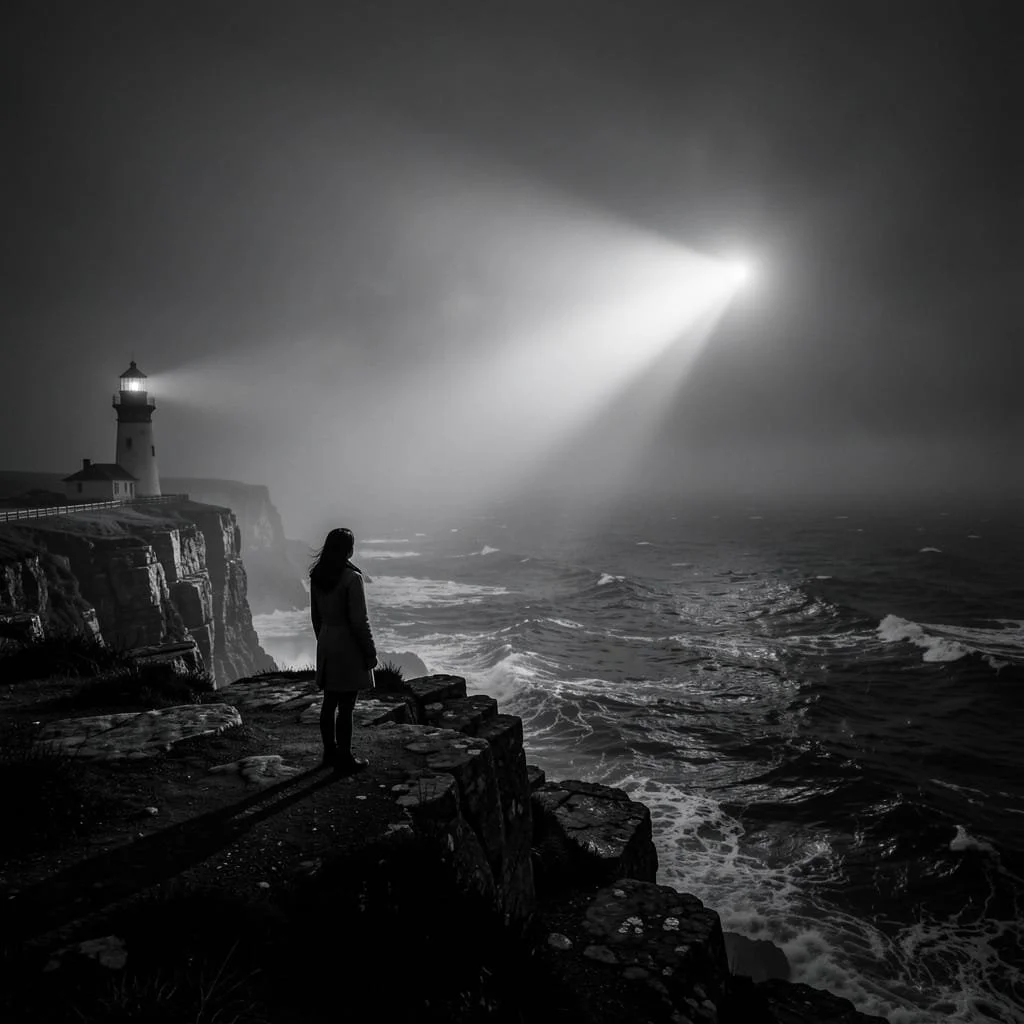
The Loneliness of Mastery
Mastery has no conscience. It simply sees more than competence.
Whether that insight heals or harms depends entirely on the person who possesses it.
That's why the greatest detective and the greatest criminal often understand each other better than anyone else understands either of them. They're both masters, but serve different ends.
Mastery is not an extension of competence. It is something altogether different.
Competence satisfies the standard. Mastery questions the standard.
Competence follows established paths. Mastery begins where the path ends.
Competence solves familiar problems. Mastery recognizes problems no one else realizes exist.
Imagine a bomb with thirty seconds remaining.
The detonator isn't in the manual.
Do you want the technician who memorized every procedure? Or the person who understands why the procedures existed in the first place?
Mastery isn't rebellion.
Mastery sees more than competence.
It’s an understanding of reality so complete that rules become tools instead of boundaries.
That's why the master detective notices the contradiction hidden beneath a mountain of evidence and the engineer stares at a perfectly acceptable design and knows "It won't fail here. It will fail there."
To everyone else these insights appear effortless. They're anything but.
Mastery is expensive.
It costs money. Everything does. The real cost of mastery is time. Years, sometimes decades, of evenings spent studying after competence would have been enough. Conversations cut short because the master refuses to let go of a problem. Hobbies discarded. Comfort abandoned, and, more often than not, relationships with those who give life meaning.
Most people stop pursuing mastery once competence provides a satisfying life. There's nothing wrong with that. Competence builds homes, raises families, and feeds cities.
Mastery asks for something different.
It asks a question competence only asks when something breaks: What’s missing?
Asked often enough, that question changes a person. Eventually the master no longer reasons step by step. Recognition replaces calculation. Patterns emerge before explanations.
The competent person's breakthrough becomes the master's ordinary experience—time compressed into understanding, not magic. Thousands of hours have become perception.
Ironically, that's where loneliness begins, because they inhabit a reality few others can see. They’re pursued for their insight, but isolated because of their point of view.
The more deeply perception develops, the more difficult it becomes to explain.
A master often reaches the correct conclusion in seconds.
Explaining how they arrived there may take hours, if they can explain it at all.
This is why noir heroes so often walk alone—witnesses tell consistent stories and the official explanation makes perfect sense—the noir hero notices the hairline crack running beneath the foundation and keeps digging after everyone else wants to close the case.
Only the noir hero will endure ridicule, skepticism, and loneliness long enough to prove that what looked complete was just the beginning of the story. This brings isolation, but makes the rest of the story possible. This is not the protagonist’s reward. It's the price of entry to what’s really interesting.
Because once you've seen the pattern, pretending not to see it is no longer possible.
The loneliness of mastery.
It isn't isolation from people. It's isolation from shared perception.
The master and everyone else are looking at the same evidence, but see different worlds.
Perhaps that's why these characters continue to resonate. We all recognize moments when reality refuses to fit the official explanation.
Most people, ultimately, accept the explanation, because they don’t need anything else. The skeptic, the expert, the protagonist—the master looks deeper, because they have to.
Every great thriller begins when a master notices something the competent world overlooked.
Perhaps every meaningful discovery begins exactly the same way.
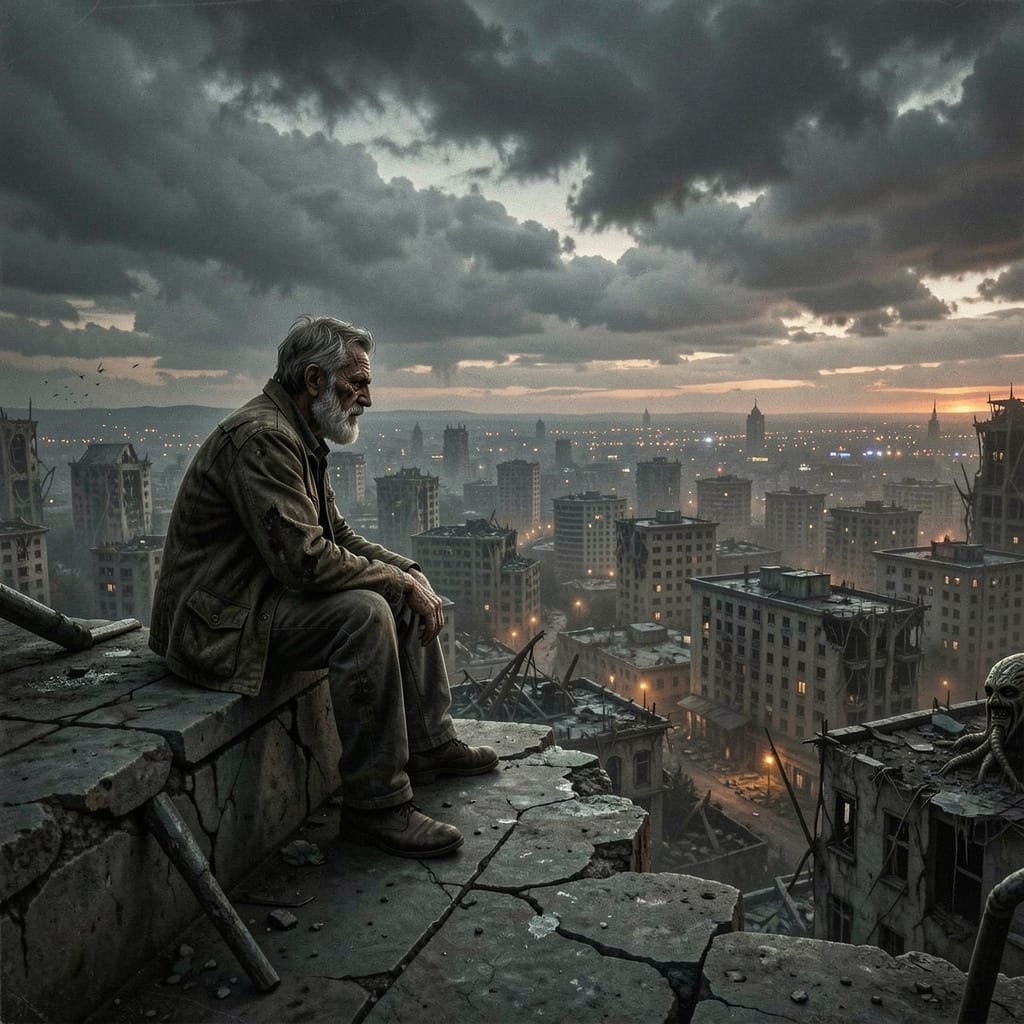
Time and Pressure Create Diamonds…and Monsters
Time and Pressure Create Diamonds. There’s a lie hidden inside the phrase. The notion that pressure creates diamonds is well known.
Time and Pressure Create Diamonds
There’s a lie hidden inside the phrase.
The notion that pressure creates diamonds is well known. We make the comparison when someone suffers. An injury, an illness, an obstacle. Something unexpected that creates an existential challenge. Why me? We ask. Because there has to be a reason. Something more than isolation, mortality, or dread.
So we say that something good will come because we want our suffering to mean something. We want to believe endurance transforms pain into value. That if we survive enough compression, enough heat, enough time underground, we emerge harder, brighter, even purified.
But pressure creates other things too.
Fault lines.
Explosions.
Collapse.
In noir fiction, time and pressure rarely produce heroes. And the heroes we find? Flawed, wounded, uncertain. Human, like the rest of us. Holding to a moral code in the midst of temptation to go along, like everyone else. We want to believe time and pressure improve us, when they actually produce people who have adapted to damage so completely they no longer recognize themselves outside it.
That’s what makes noir protagonists fascinating.
Not toughness.
Transformation.
The detective who doesn’t sleep normally.
The executive who measures human lives in risk calculations.
The politician who starts with idealistic dreams speaking exclusively in containment strategies.
The survivor who freezes people out because letting them in proved too expensive.
Pressure changes the chemistry of people.
And time finishes the work.
A single traumatic event is dramatic. Fiction loves that because it’s cinematic. A well-defined occurrence with a clear beginning and ending. A problem that can be solved. Thus the ticking clock.
Real trauma is sedimentary. Layer after layer. Rationalization after rationalization. Tiny compromises stacking over years until a person wakes up inside a life they once would have feared.
That’s noir.
Not darkness for style.
Erosion.
A character under pressure reveals who they are. A character under pressure for years reveals what they can become.
That distinction matters.
Especially now.
Modern life quietly trains people to fragment themselves through little choices:
perform competence,
suppress panic,
optimize constantly,
remain reachable,
remain productive,
remain controlled,
remain polished no matter the psychological cost.
Want mastery? Do something 10000 times.
Want to achieve a goal? Break it down into digestible pieces.
Because the journey of a thousand miles begins with a single step.
In noir fiction, pressure isn’t episodic. It’s atmospheric.
And people adapt to atmosphere…because we have to breathe to live.
The frightening thing about morally compromised characters isn’t that they’re evil. It’s that many of them once believed they were doing the responsible thing.
Protect the city.
Protect the company.
Protect the family.
Protect the mission.
Protect stability.
Pressure converts ideals into mechanisms.
That’s why some of the most haunting noir stories are not about criminals descending into darkness, but decent people slowly accommodating it. Because it seems reasonable. Just go along.
One compromise at a time.
A detective plants evidence because the suspect is “obviously guilty.”
A journalist buries a story because the fallout would destroy too many lives.
A scientist hides data because the public would panic.
A politician lies because truth would destabilize the system.
The tragedy isn’t the decision itself. It’s how reasonable it sounds in the moment.
Time completes the corruption.
Because eventually the behavior stops feeling temporary. It becomes identity.
That’s the hidden terror underneath many thrillers and noir stories: the fear that adaptation itself may be irreversible. Fiction paints the choice as survival. It has to be that way. But the slippery slope of incremental choices means the person who emerges from pressure may no longer resemble the person who entered it.
The Four Cs
A diamond’s value is determined by four measures: cut, color, carat, and clarity.
And clarity is essential to noir storytelling.
Pressure can create clarity.
Not purity. Not perfection. Clarity.
Some people become more honest when stripped down by circumstance. More willing to confront uncomfortable truths. More capable of seeing systems as they are. Like my character Claire Holloway.
Clarity helps characters peel away societal illusions.
People under pressure often stop lying to themselves.
That’s valuable. Dangerous, but valuable.
Maybe that’s why noir endures as a genre.
Because beneath the crime, the corruption, the conspiracies, and the violence, noir is ultimately about transformation under compression. About what remains after illusion is burned away.
And whether what survives deserves to.

A QUIET APOCALYPSE?
The word apocalypse usually brings to mind fire, chaos, and unmistakable catastrophe.
But what if it didn’t start that way?
And we’re not talking about the usual doomsayers who tell us the end is here.
You know the type: hellfire, brimstone, and repentance. Believe or burn. Now!
No disrespect intended, but all that burning comes at the end, when the story is over.
It’s like reading the last page of a novel and expecting to understand the whole story.
Revelation reads less like a sermon and more like symbolic horror. Like most stories. We don’t start at the end. We start at the beginning. And in the beginning…
What if the biblical apocalypse had already begun…and no one noticed?
What if the apocalypse wasn’t an event?
What if it was a process?
Something gradual enough to feel normal while it was happening?
And disturbingly plausible.
The Apocalypse Wouldn’t Look Like a Movie
Most apocalyptic fiction follows a pattern:
· Nuclear war
· Zombie outbreaks
· Alien invasions
These are visible, undeniable events. Cinematic portrayals that entertain. They turn collapse into spectacle.
But the biblical apocalypse—particularly in texts like Revelation—is often symbolic, layered, and open to interpretation. Many of its “signs” could unfold in ways that blend into everyday life.
Instead of a sudden collapse, imagine:
· Systems slowly failing
· Truth becoming harder to identify
· Consensus becoming impossible
· People adapting instead of resisting
Not a bang—just the normalization of decay.
The Concept of a “Quiet Apocalypse”
A quiet apocalypse doesn’t announce itself.
It looks like:
· Rising instability that becomes routine
· Corruption that feels inevitable
· Violence that becomes background noise
People don’t panic—they adjust.
When everyone senses something is wrong, but no one can agree on what.
This is what makes it terrifying.
Because if the end arrives gradually, most people would call it normal.
Why This Idea Resonates Now
Modern life already contains elements that feel dystopian:
· Information overload
· Distrust in institutions
· Fragmented realities
The line between “normal” and “collapse” is thinner than we like to believe.
That’s why readers are drawn to stories that ask: What if this is what the beginning of the end actually looks like?
A quiet apocalypse doesn’t arrive with sirens.
It arrives when exhaustion replaces outrage.
When people stop asking whether something is true and start asking whether it’s useful.
Where Fiction Explores This Idea
Some stories touch on this theme indirectly.
For example:
· The Last Policeman explores how people behave when the end is certain—but still unfolding slowly
· Do Androids Dream of Electric Sheep? (Bladerunner) presents a world already degraded, where meaning itself is unstable
But few stories fully commit to the idea of an apocalypse that is:
· Rooted in biblical imagery
· Modern in setting
· Nearly invisible in progression
The Detective in the End Times
One of the most compelling ways to explore a quiet apocalypse is through a detective.
Why?
Because a detective:
· Notices patterns others ignore
· Investigates truth in a world of deception
· Fights for meaning when meaning is collapsing
In a world where the apocalypse is unfolding unnoticed, the detective may be the only one asking:
Is something fundamentally wrong with reality itself?
If you’re drawn to:
· Philosophical dystopia
· Noir-style investigations
· Stories where reality itself feels unstable
Maybe the most disturbing possibility isn’t that the apocalypse is coming.
It’s that people can live through it without ever realizing where they are.
And the few who do notice are dismissed as unstable, paranoid…or dangerous.
That idea sits at the center of The Zalerian Chronicles.
What if a biblical-style apocalypse had already begun and no one noticed?
You can check out the series here.
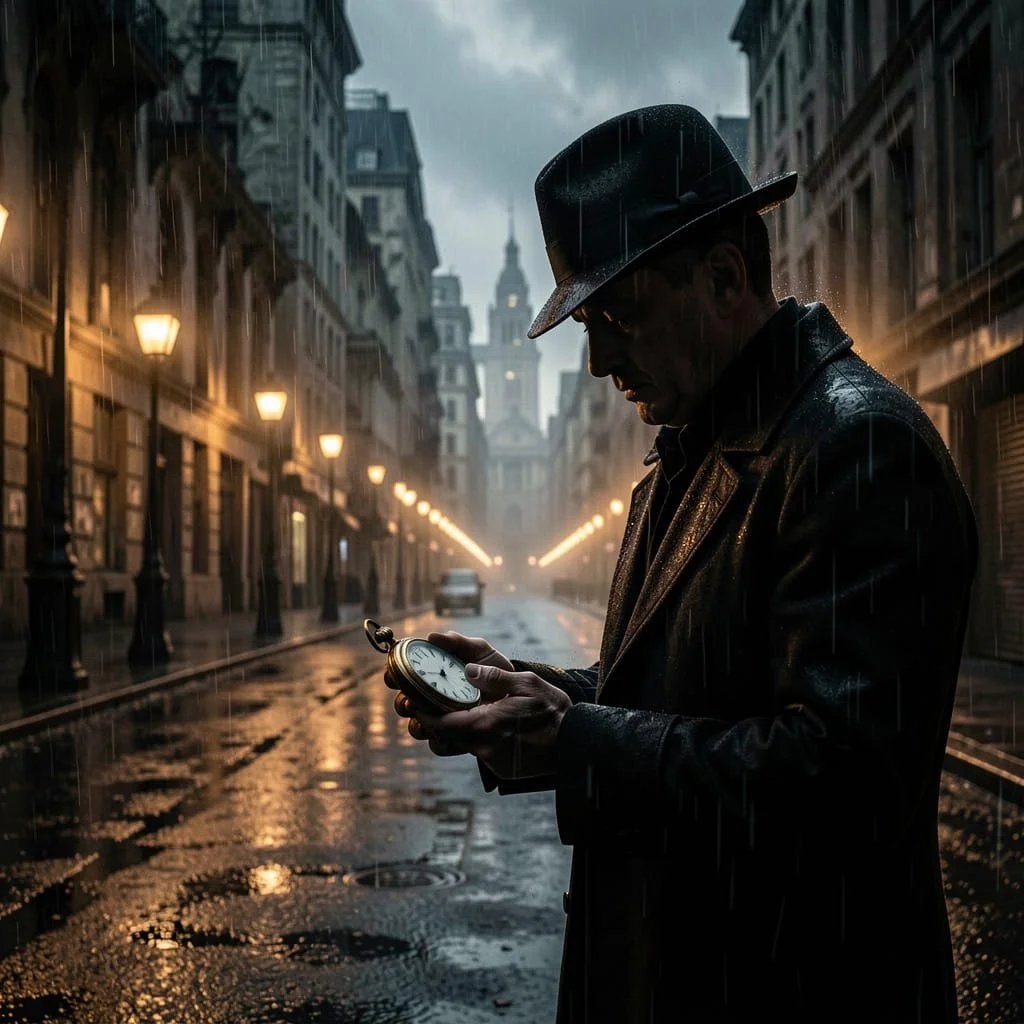
Best Dystopian Detective Novels You Haven’t Read Yet
Dystopian fiction shows us broken worlds.
Detective fiction tries to make sense of them.
Put the two together—and you get one of the most compelling, underexplored genres in modern storytelling:
Dystopian detective fiction is a genre that works well because a dystopian world is defined by:
Corruption
Control
Collapse
A detective exists to:
Find truth
Expose hidden systems
Navigate moral ambiguity
In other words, a detective is the perfect guide through a broken world.
Must-Read Dystopian Detective Stories
Here are some standout examples:
1. Do Androids Dream of Electric Sheep?
A bleak, philosophical future where bounty hunters track artificial humans.
Themes:
Identity
Empathy
Reality vs illusion
2. The Last Policeman
A detective investigates a murder while the world prepares for an extinction-level event.
Themes:
Meaning in the face of inevitability
Duty vs despair
3. Altered Carbon
A cyberpunk noir story involving memory, identity, and power.
Themes:
Consciousness
Corruption
Immortality
What Makes a Great Dystopian Detective Story?
The best stories in this genre share:
A world that feels unstable—but believable
A protagonist searching for truth in a system designed to hide it
Moral complexity (no clear heroes or villains)
The Missing Piece: The Unnoticed Apocalypse
Most dystopian detective stories assume: the world is already broken—and everyone knows it
But what happens when the world is breaking…and no one recognizes it?
That’s where the genre becomes something else entirely.
A Different Kind of Investigation
Imagine a detective not just solving crimes…
But uncovering evidence that reality itself is shifting.
That something larger—something biblical in scale—is unfolding quietly in the background.
And no one else sees it.
If You’re Looking for something new and you enjoy:
Noir-style investigations
Philosophical sci-fi
Dystopian worlds with deeper meaning
Then you may want to explore The Zalerian Chronicles.
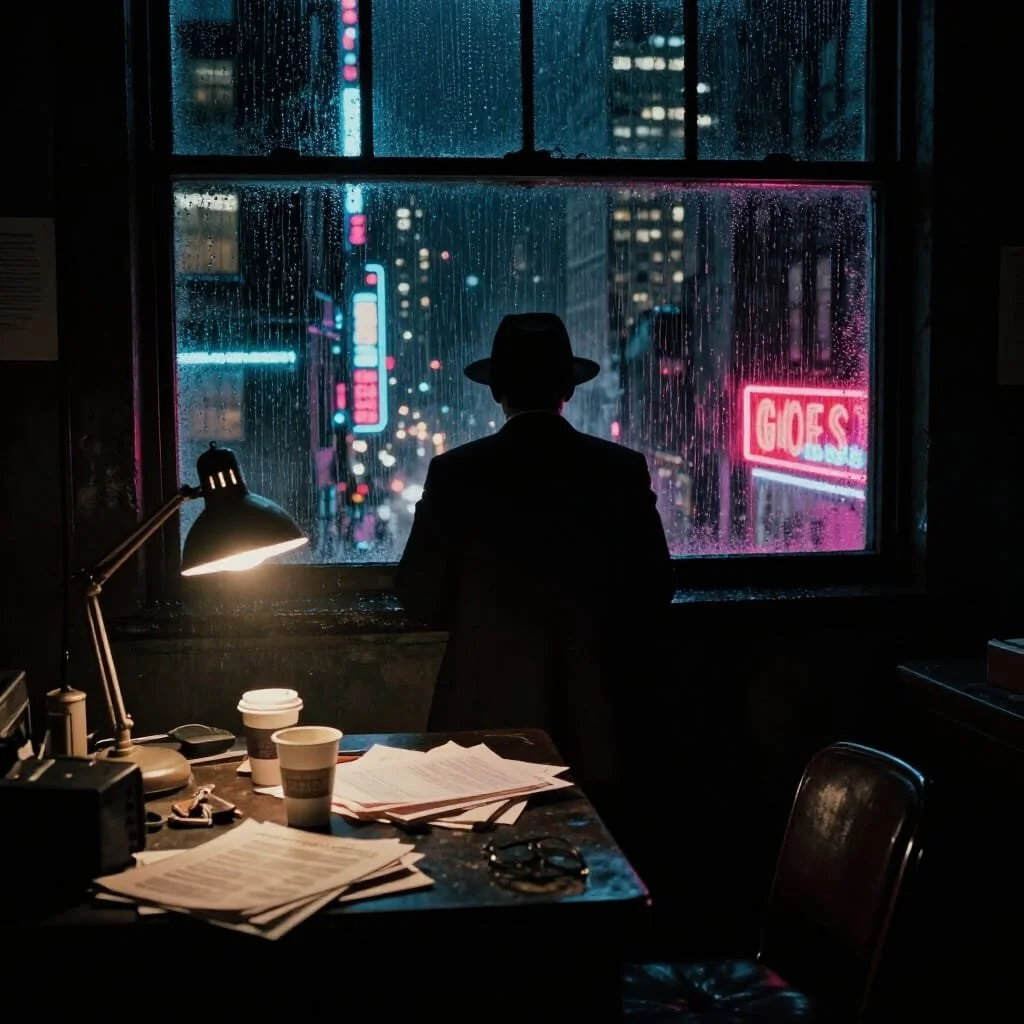
Conspiracy Thrillers Are More Popular Than Ever — Here’s Why
People don’t trust institutions the way they used to.
That cultural shift has fueled the explosive rise of conspiracy thrillers across books, television, and film. Readers are increasingly drawn toward stories where hidden networks manipulate events from the shadows, corporations bury dangerous truths, and ordinary people uncover systems far larger than themselves.
People don’t trust institutions the way they used to.
That cultural shift has fueled the explosive rise of conspiracy thrillers across books, television, and film. Readers are increasingly drawn toward stories where hidden networks manipulate events from the shadows, corporations bury dangerous truths, and ordinary people uncover systems far larger than themselves.
Conspiracy fiction taps into a universal fear:
What if the real danger is invisible?
That tension drives The Zalerian Chronicles.
What begins as isolated investigations slowly reveals interconnected forces operating beneath the surface—powerful individuals, hidden agendas, corruption, financial manipulation, and secrets capable of destroying lives. The mysteries grow larger with every revelation, pulling readers into a widening web of danger.
Modern readers love conspiracy thrillers because they combine multiple emotional experiences at once:
Mystery and puzzle-solving
Psychological suspense
Moral ambiguity
High stakes
Fear of hidden power
The genre creates momentum through escalation. Every answer leads to a larger question. Every discovery reveals deeper layers of deception.
That structure is intensely addictive.
Readers become investigators alongside the protagonist, constantly trying to piece together clues before the truth becomes catastrophic.
The strongest conspiracy thrillers also feel believable.
They don’t rely on fantasy. They rely on the terrifying possibility that systems designed to protect people may actually protect themselves first.
That realism creates emotional intensity.
In The Zalerian Chronicles, conspiracies are never abstract. Their consequences are personal. Careers collapse. Families fracture. Innocent people disappear. Truth becomes dangerous currency.
And unlike traditional detective fiction, solving the mystery doesn’t always restore order.
Sometimes uncovering the truth creates even greater chaos. Detective Zalerian’s journey does just that.
That uncertainty reflects the modern world readers recognize around them—complex, unstable, and morally compromised.
Which is exactly why conspiracy thrillers continue to dominate the genre landscape.
Readers no longer want simple battles between good and evil.
They want stories about power.
About hidden motives.
About systems that look invincible until one person starts asking the wrong questions.
And once those questions begin, there’s no going back.
The Hidden Power of Atmospheric Thrillers
Some stories entertain you.
Others swallow you whole.
Atmosphere is what separates a forgettable thriller from one that lingers in your head for weeks after the final page. It’s the feeling of rain-soaked streets, flickering neon lights, empty parking garages at midnight, or a city that feels alive in all the wrong ways.
Atmosphere creates emotional gravity.
Some stories entertain you.
Others swallow you whole.
Atmosphere is what separates a forgettable thriller from one that lingers in your head for weeks after the final page. It’s the feeling of rain-soaked streets, flickering neon lights, empty parking garages at midnight, or a city that feels alive in all the wrong ways.
Atmosphere creates emotional gravity.
In The Zalerian Chronicles, the setting is never just background scenery. Cities become pressure cookers. Wealth hides rot beneath polished glass towers. Quiet rooms carry the weight of buried secrets. Every environment reflects the psychological tension unfolding beneath the surface.
The best atmospheric thrillers make readers feel unsafe before anything bad even happens.
That tension matters because suspense isn’t built only through action—it’s built through anticipation.
Readers of modern mystery and thriller fiction crave immersion. They want stories that create dread through mood, pacing, and emotional texture. Atmospheric storytelling transforms simple investigations into cinematic experiences.
That’s why dark detective fiction continues to thrive.
A great atmosphere does three powerful things:
1. It Creates Emotional Immersion
Readers stop observing the story and start living inside it. They can hear the storm outside the apartment window. They can feel the tension during a silent elevator ride. Suspense becomes physical.
2. It Makes Danger Feel Unpredictable
In atmospheric thrillers, danger doesn’t always arrive with explosions or gunfire. Sometimes it’s a conversation that feels slightly wrong. Sometimes it’s silence. Sometimes it’s realizing a character already knows too much.
3. It Deepens Character Psychology
Environment reflects emotional collapse. A city drowning in rain mirrors desperation. A sterile corporate tower mirrors emotional emptiness. The setting becomes part of the story’s psychology.
That fusion of atmosphere and suspense is central to The Zalerian Chronicles and its corporate antagonist Helix Trope.
The series blends detective fiction, conspiracy thriller elements, psychological tension, and noir-inspired storytelling into mysteries where the emotional environment matters just as much as the crime itself.
Readers who enjoy layered suspense often discover that atmosphere becomes the addictive ingredient they didn’t know they were searching for.
Because the most haunting thrillers don’t simply tell you danger is coming.
They make you feel it long before the first body drops.
Why Readers Can’t Look Away from Morally Gray Detectives
Crime fiction has always loved heroes with scars.
The perfect detective—the flawless genius with all the answers—has faded into the background. Modern readers want investigators who bleed, break, and make impossible choices. They want characters who solve crimes while barely surviving themselves.
That’s the pulse behind The Zalerian Chronicles.
Crime fiction has always loved heroes with scars.
The perfect detective—the flawless genius with all the answers—has faded into the background. Modern readers want investigators who bleed, break, and make impossible choices. They want characters who solve crimes while barely surviving themselves.
That’s the pulse behind The Zalerian Chronicles.
At the center of the series is John Zalerian, a veteran Los Angeles homicide detective, dragged into mysteries where justice and survival rarely align. Every case forces him deeper into a world where corruption wears expensive suits, institutions hide darker truths, and every answer comes with a cost.
Readers today are drawn to morally gray detectives because they feel real.
They aren’t superheroes. They’re survivors.
They carry guilt. They make compromises. Sometimes they fail. Sometimes they win in ways that don’t feel like victories at all.
That emotional tension creates the addictive quality that keeps readers turning pages long after midnight.
The best detective fiction doesn’t just ask Who committed the crime?
It asks:
What does justice actually mean?
How far would you go to protect yourself?
What happens after you cross a line you can’t uncross?
Those questions sit at the heart of modern mystery and thriller fiction.
Fans of psychological thrillers, noir mysteries, police procedurals, and conspiracy fiction often gravitate toward stories where the detective is as complicated as the criminal. Readers want emotional stakes alongside suspense. They want investigations that expose the darkness inside systems—and inside people.
That’s why series built around layered protagonists continue to dominate bestseller lists and streaming adaptations alike.
In The Zalerian Chronicles, every mystery changes Zalerian. Every revelation leaves damage behind. The danger isn’t only external—it’s psychological. The deeper he digs, the more the investigations threaten to consume his identity entirely.
And that’s what keeps readers hooked.
Not perfection.
Humanity.
If you love dark mysteries, atmospheric thrillers, conspiracy fiction, and character-driven detective stories, The Zalerian Chronicles was built for you.
The question is never just whether Zalerian will solve the case.
The real question is whether he’ll survive becoming the person the case requires.

Twas the apocalypse before christmas
What better way to kick off a blog than a little entertainment? I hope you enjoy the fun…because even zombies like the holidays! I wrote this as a tongue-in-cheek Christmas poem for fellow lovers of zombies, alien invasions, and end-of-the-world pulp fiction.
What better way to kick off a blog than a little entertainment? I hope you enjoy the fun…because even zombies like the holidays! I wrote this as a tongue-in-cheek Christmas poem for fellow lovers of zombies, alien invasions, and end-of-the-world pulp fiction.
'Twas the night before Christmas, when from outer space
the creatures were stirring, searching the place;
The parents were hung by the reaper’s red glare,
Their kids at St. Vincents, getting medical care.
The zombies all shuffled, their hair up in dreds;
While visions of brains filled their stocking-capped heads;
And troops in their helmets with guns and their traps,
Shivered outside with loud stomps and their claps
When up in the sky there arose such a sight,
The flash of an E-M-P filled the night.
The soldiers hunkered down in their holes right quick
In case twas a death ray aimed to shrivel and stick.
The moon glared red in the deep crimson glow.
Giving the lustre of midday to objects below,
When what to our wondering eyes did appear,
But an alien spaceship incredibly near
With a large, gruesome driver, evil and sick,
Shooting his lasers in a speedy click-click
More rapid than fighters his cruisers they came,
And he whistled, and shouted, and called them by name:
"Now, Vorlons! now, Martians! now Cylons and Drengin!
On, Dremer! on, Duros! on, Durlans and Drayan!
The soldiers they shouted, as they fired their guns
Bazookas and cannons, a line of small suns
Tearing divots and holes in the alien horde
Who crashed with their colonists still on board.
Those that made it through the lead-filled night
Emerged from their ships to conquer and blight.
Just when it seemed, the end had drawn near,
The zombies arrived, to make it quite clear.
But, wait, what’s this? The zombies ran by
And attacked the aliens who massed nearby
Soon, in a twinkling, we heard the real proof
As they tossed the invaders from evry roof
Death rays and lasers burned zombies bright
The battle was fierce, by dawn’s early light.
When out of the smoke, their leader did bound
A grizzled old zombie, his head on the ground
He had a long rod, from his neck to his foot,
And his clothes were tattered, all ashes and soot;
A bundle of heads he had flung on his back,
Green alien blood dripped from his pack.
His eyes, sere and empty, called to his bod
that picked his head up, and stuck it onto the rod
The stump of an arm he held tight in his teeth,
And the smoke, it encircled his head like a wreath;
He had a voice so creepy, wheezy and loud
And called to his kin who came in a crowd.
A wink of his good eye and a twirl of his head
Soon gave us to know we had nothing to dread;
The zombies walked past us, the last ones alive
And told us in their way, tonight we’d not strive.
With brains for a week, they made it quite clear
The battle would start the day after new year.
But we heard them exclaim, as they passed out of sight—
“Happy Christmas to all, and to all a good night!”